ServicesWater Softener Installation
Water Softener Installation in Anthem, AZ
We install water softeners that stop the scale and spotting hard water leaves on your fixtures, glassware and water heater. Every install gets a bypass valve, a drain line with a proper air gap and solid connections, so the system works well and the plumbing holds up to inspection.
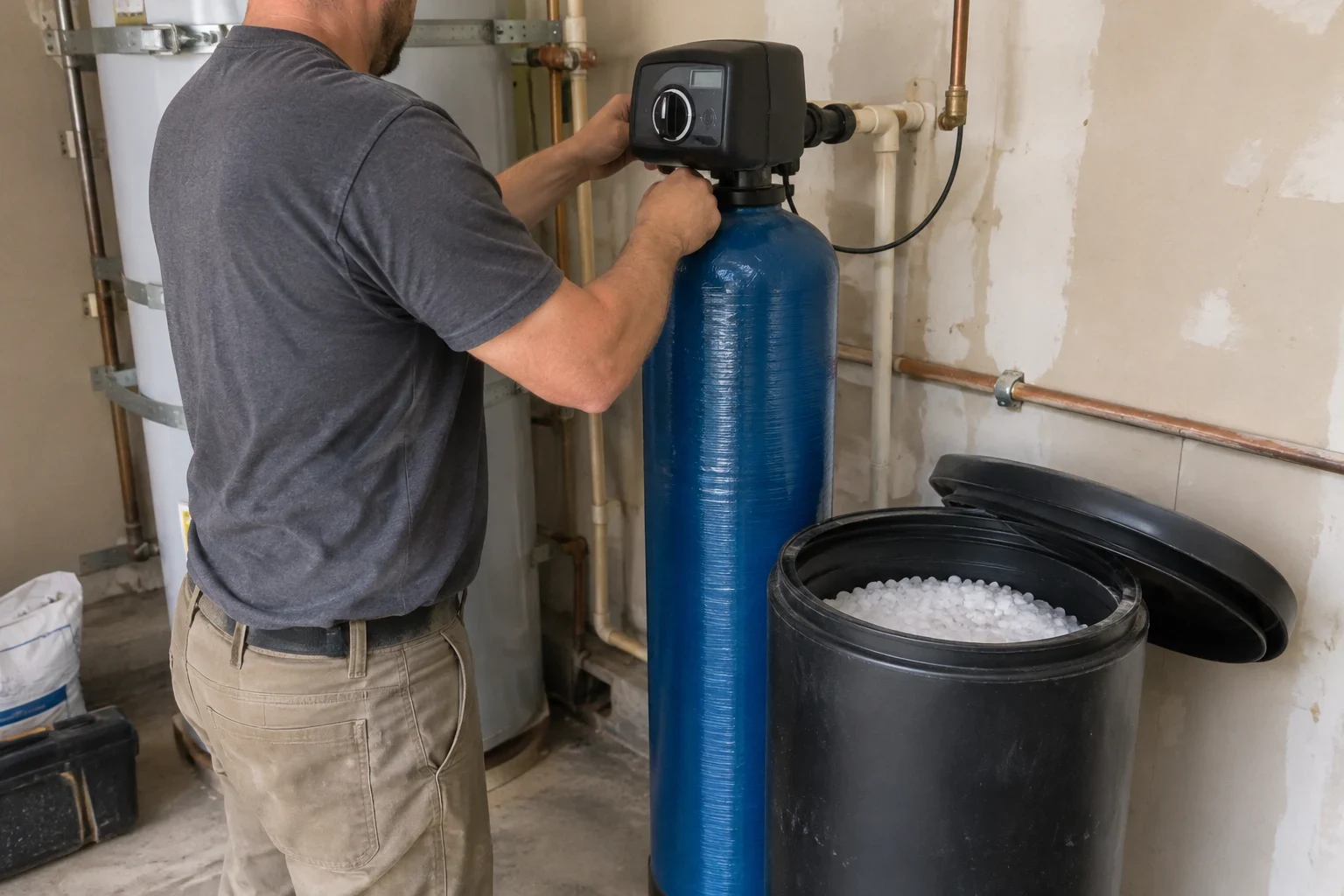
What a softener installed the right way does for your home
Inside a water softener is a tank of resin beads. As water moves through, the beads grab calcium and magnesium and trade them for sodium or potassium. What comes out the other side won't crust up your faucets, cloud your glassware or coat the inside of your water heater and pipes with scale.
Picking a good unit is only part of it. The way it connects to your plumbing decides how long it lasts and whether it's safe. Code calls for the regeneration drain to empty through an open air gap, a short break in the line that keeps used brine from being drawn back into your drinking water. A bypass valve lets you shut off just the softener while water still flows to the rest of the house. Both are standard on our installs.
Hard water is a fact of life around the Phoenix area, and plenty of homes were plumbed with a spot set aside for a softener near the main line. When that setup exists, we tie into it correctly. When it doesn't, we lay out what creating one involves before we touch a pipe.
What comes with every softener install
- Capacity matched to your family
- We find out how many people are in your home and how much water you go through, then pick a unit sized for that. An undersized softener regenerates over and over and eats salt. An oversized one means paying for capacity that sits unused.
- A bypass for easy servicing
- We fit a bypass valve on each install. It lets you take the softener out of the loop for maintenance, or send hard water to an outdoor spigot, while every other tap in the house stays on.
- Air gap on the drain line
- Wastewater from the regeneration cycle runs to an approved drain and drops through an open air gap. That gap stops dirty water from backing into your supply, and inspectors check it early.
- Overflow routing and a power check
- The brine tank's overflow gets its own path so a stuck float won't leave a puddle on your garage floor. We also make sure there's a proper outlet within reach of the control valve.
- Flush, settings and a quick lesson
- Once it's connected, we flush the unit, program the regeneration timing and salt settings, and watch every joint under full pressure. Then we show you how to use the bypass and read the controls.
How to tell hard water is wearing on your home
Chalky buildup that keeps returning
Faucet aerators, showerheads and the base of each tap grow a hard white crust. You scrub it away, and a few weeks later it's back.
Cloudy glasses and streaked shower doors
Dishes leave the dishwasher with a dull film, and glass shower doors hold onto water spots no matter what cleaner you buy.
Popping sounds from the water heater
Crackling or knocking while the tank heats usually means minerals have settled on the bottom. That sediment forces the heater to work harder and can cut its life short.
Soap that barely suds up
Hardness minerals block lather, so you reach for more soap and shampoo. Skin and hair may still feel dry or coated afterward.
Salt going in, spots still showing
If you keep filling the brine tank and the crust comes back anyway, the softener or its valve may be at the end of its life. We can swap it out and fix the plumbing around it where needed.
What affects the price of a softener install
Every home's plumbing is a little different, so we price each install after hearing about yours. Your quote lists the system, the labor and any fees separately, so you can see where the money goes.
System capacity and type
Larger households need more resin and a bigger brine tank. The control valve type also matters, since some regenerate on a timer and others by measured water use.
Existing loop or new plumbing
Connecting to an existing softener loop is simpler. Running new pipe to create a loop at the main line takes more time and material.
Drain and power access
If there's no approved drain or outlet close to the install spot, we may need to extend the drain line or arrange power, which adds to the job.
Permit requirements
When the job calls for official sign-off, the fee and the extra inspection visit are part of the price. We tell you up front whether that applies to your home.
Removing an old unit
Disconnecting and hauling away an existing softener adds a little labor, and sometimes reveals old plumbing that needs correcting.
How your installation goes
- 1
A conversation by phone
You tell us what you're seeing and where your main water line enters the house. We talk through system size, your plumbing and whether the job will need sign-off from the local building office, and you get your quote by phone.
- 2
Plan and paperwork
We confirm the install location, drain point and power. Where your town requires a plumbing permit for the work, we pull it before install day.
- 3
Install day
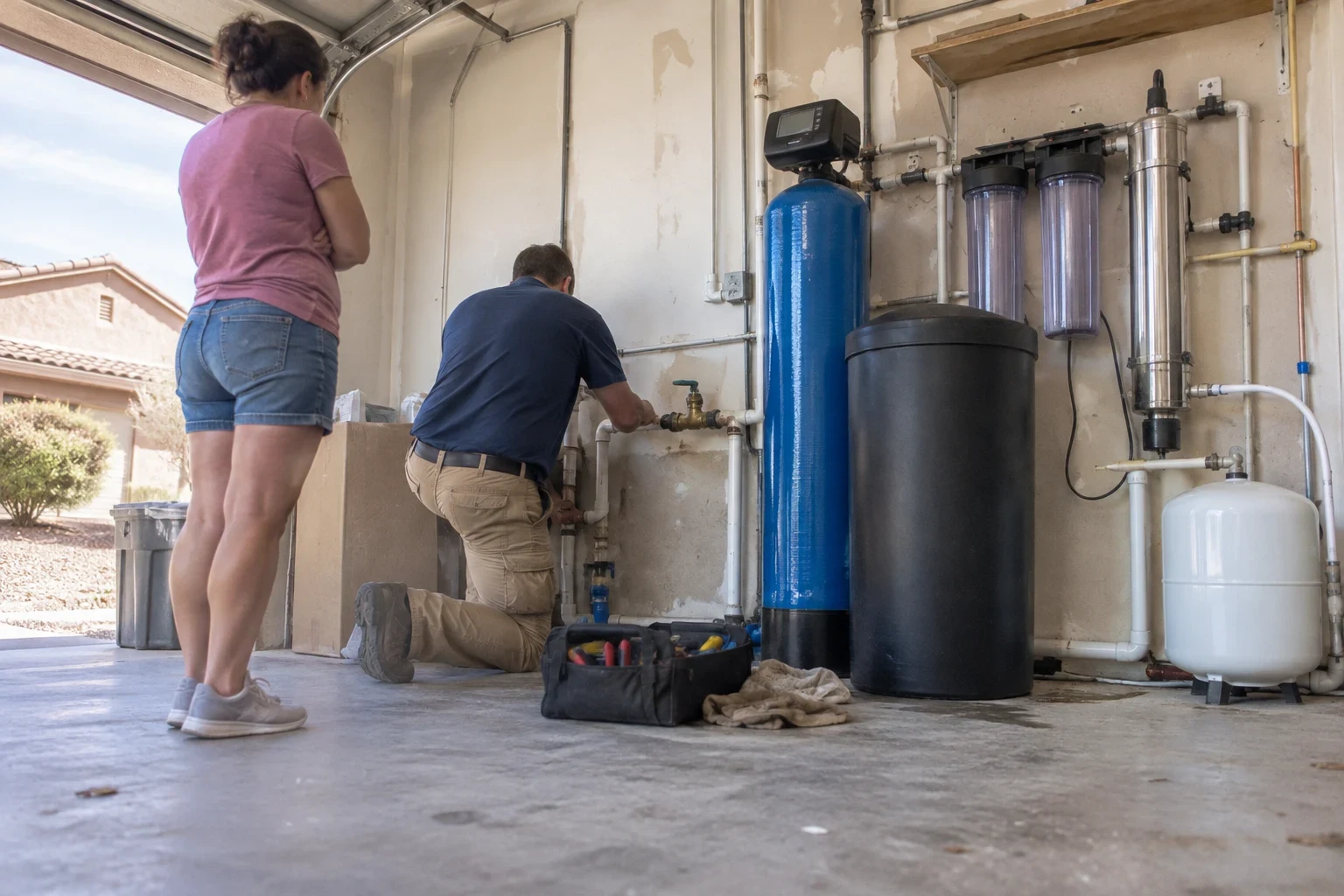
We protect the floor, shut off the water and make the connections, including the bypass and air gap drain. We give you a heads-up before closing the main, and the house is without water for only a stretch of the visit.
- 4
Startup and walkthrough
We flush the system, check every joint under pressure, program the valve and show you the bypass and salt fill. We clean up and haul away packaging and any old unit we removed.
- 5
Inspection, if required
When a permit was pulled, we schedule the inspection and are there to answer the inspector's questions about the drain, air gap and connections.
Questions we hear before a softener goes in
Is a permit needed for a softener install?
It depends on your address and how much the plumbing changes. Placing a unit on piping already set up for one is usually easier than cutting into the main line. We work that out before quoting, and when a permit applies, we handle the paperwork.
How is the installation warrantied?
Our labor carries a 2-year labor warranty, and the install has a separate 2-year installation warranty. The salt tank, resin tank and valve body have lifetime coverage. We walk through each one with you before we leave.
Does softened water taste salty?
Few people notice it. While pulling out hardness minerals, the softener adds a bit of sodium. To keep that out of your drinking water, many homes add a Reverse Osmosis System at the kitchen sink.
Will a softener take out chlorine or other contaminants?
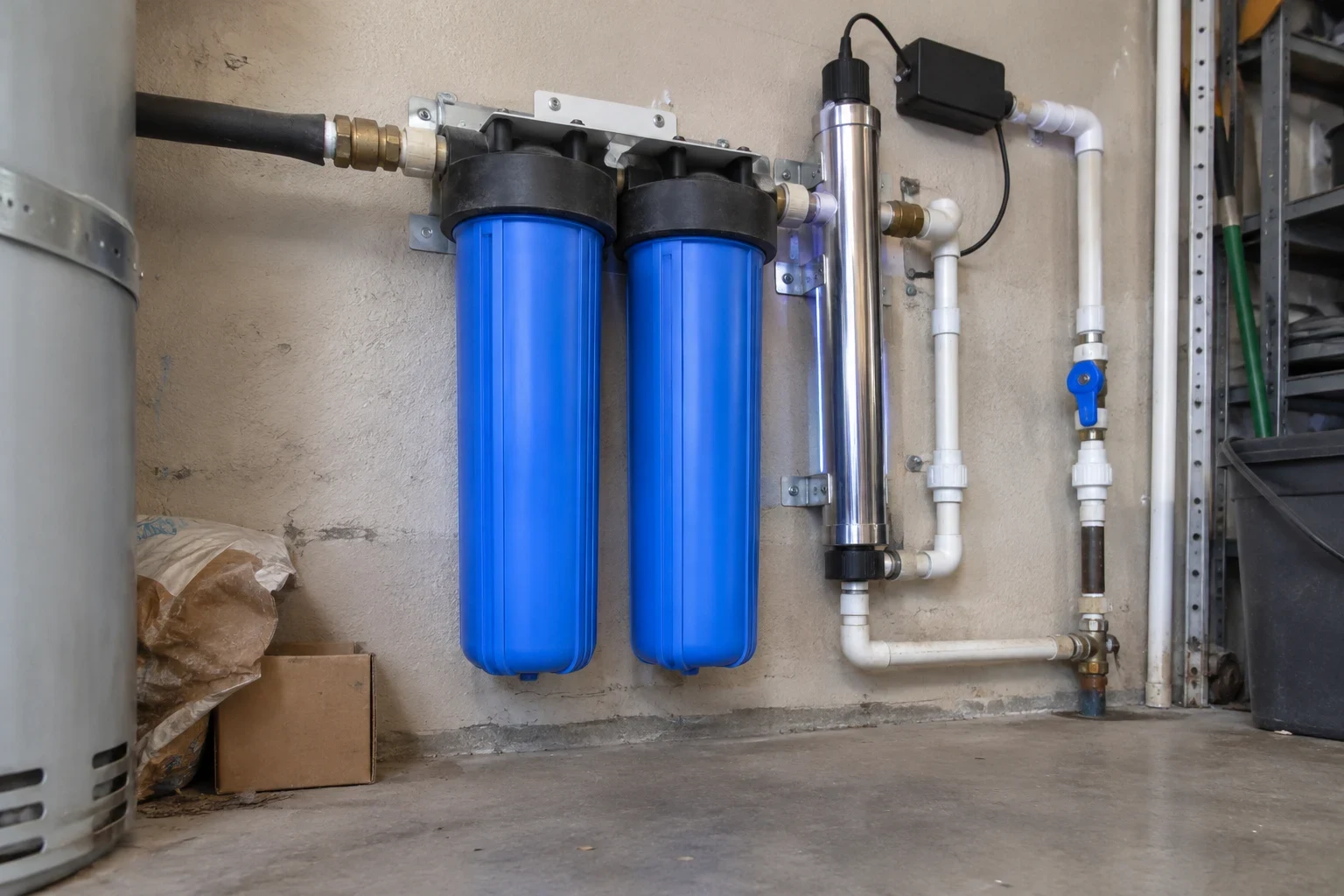
No. A softener goes after hardness minerals, not chlorine taste or odor. If those bother you, Whole-Home Filtration can share the same line, and we show you how each is set up to handle its own job.
How often does salt need adding?
That depends on how many people live there and how much water you use. Checking the brine tank every few weeks keeps you ahead of it. To skip the heavy bags, our Automated Salt Delivery service keeps the tank full.
Can the new unit go where the old one stood?
Usually, yes. If the connections, drain and air gap there are in good shape, we reuse the spot. If something does not meet code, we explain the problem and our fix before starting.
Ready for softer water in your home
Tell us about your plumbing and what hard water is doing in your home, and we'll explain the install, any code questions and the cost. We work in Anthem and nearby towns such as New River and Cave Creek.